Personal project · 3D & AI exploration
Lelit Distrikt
A personal game and experience built in Unreal Engine, exploring conversations and everyday life in a simulated society.
I created Lelit to explore what I could build by bringing 3D software and large language models together. My work spans the concept, world-building, interaction design and prototyping.

- Role
- Concept, product & interaction design
- Format
- Personal game / experience
- Build
- Unreal Engine + language models
- Simulation workspace
- CPS Studio
The starting question
What happens when a conversation belongs to a place?
I wanted to find out how far I could take a personal project with 3D tools and language models. Lelit became a way to explore that through a small society: people with their own perspectives, sharing streets, cafés and a central square.
The premise gives the experience a tension. The town is preserved beneath a dome. The outside world has collapsed, but the residents have never been told. The participant knows more than they do, and chooses how to act on that knowledge.
- 01
Observe
Notice the district’s places, routines and small encounters.
- 02
Talk
Meet a resident and hear their version of life in Lelit.
- 03
Choose
Decide what to ask, what to share and what to keep to yourself.
- 04
Return
Look for what carries over from one encounter to the next.
Designing the experience
Start with everyday life.
I use the district as a shared setting for observation and conversation. A café, a passing resident or a familiar route gives an interaction a context that a chat window alone cannot provide.
My focus is on what someone notices and chooses to do next. The atmosphere invites a slower pace; the interaction needs to make it clear how to approach a resident, listen and continue exploring.

Two connected projects
The world and the workspace.
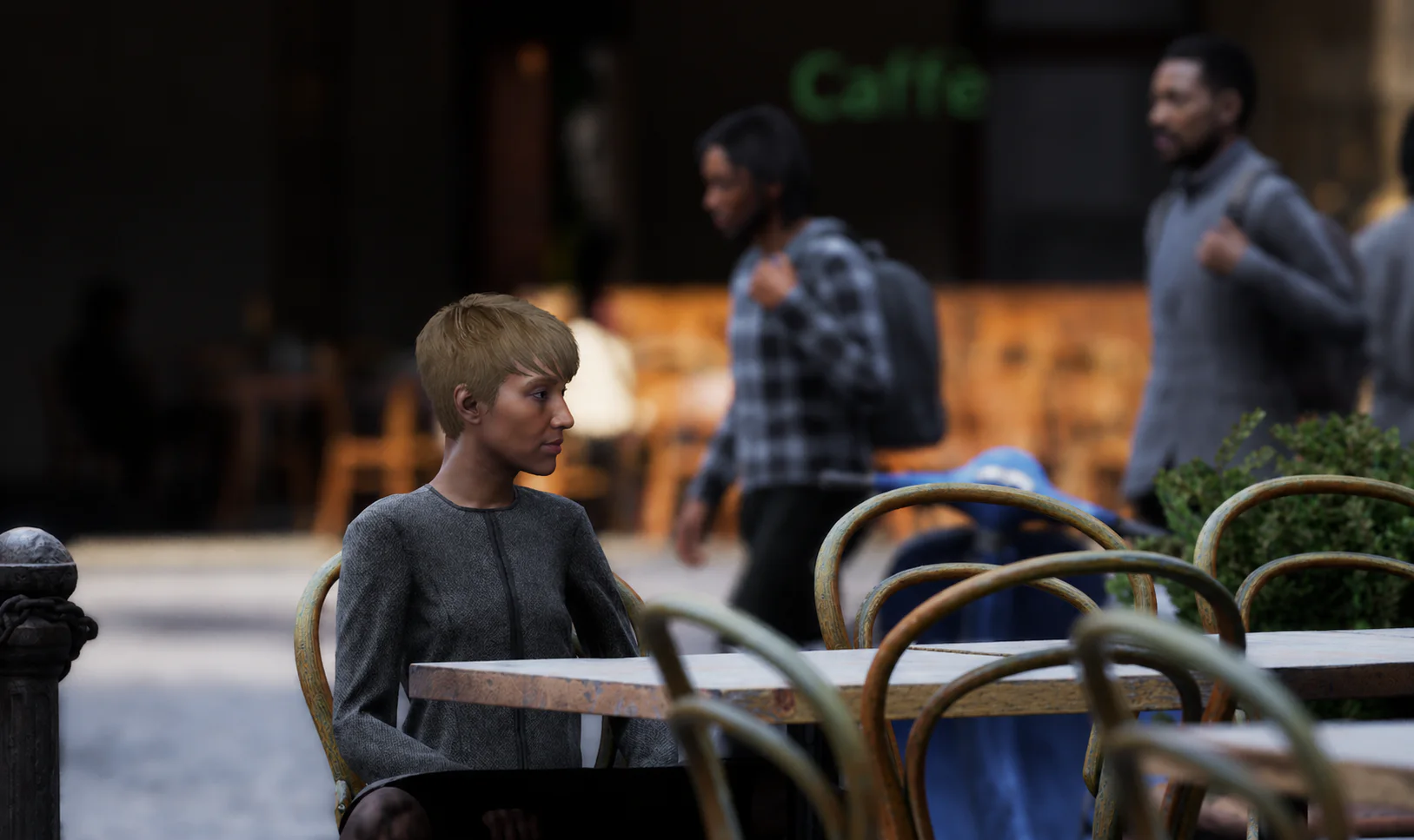
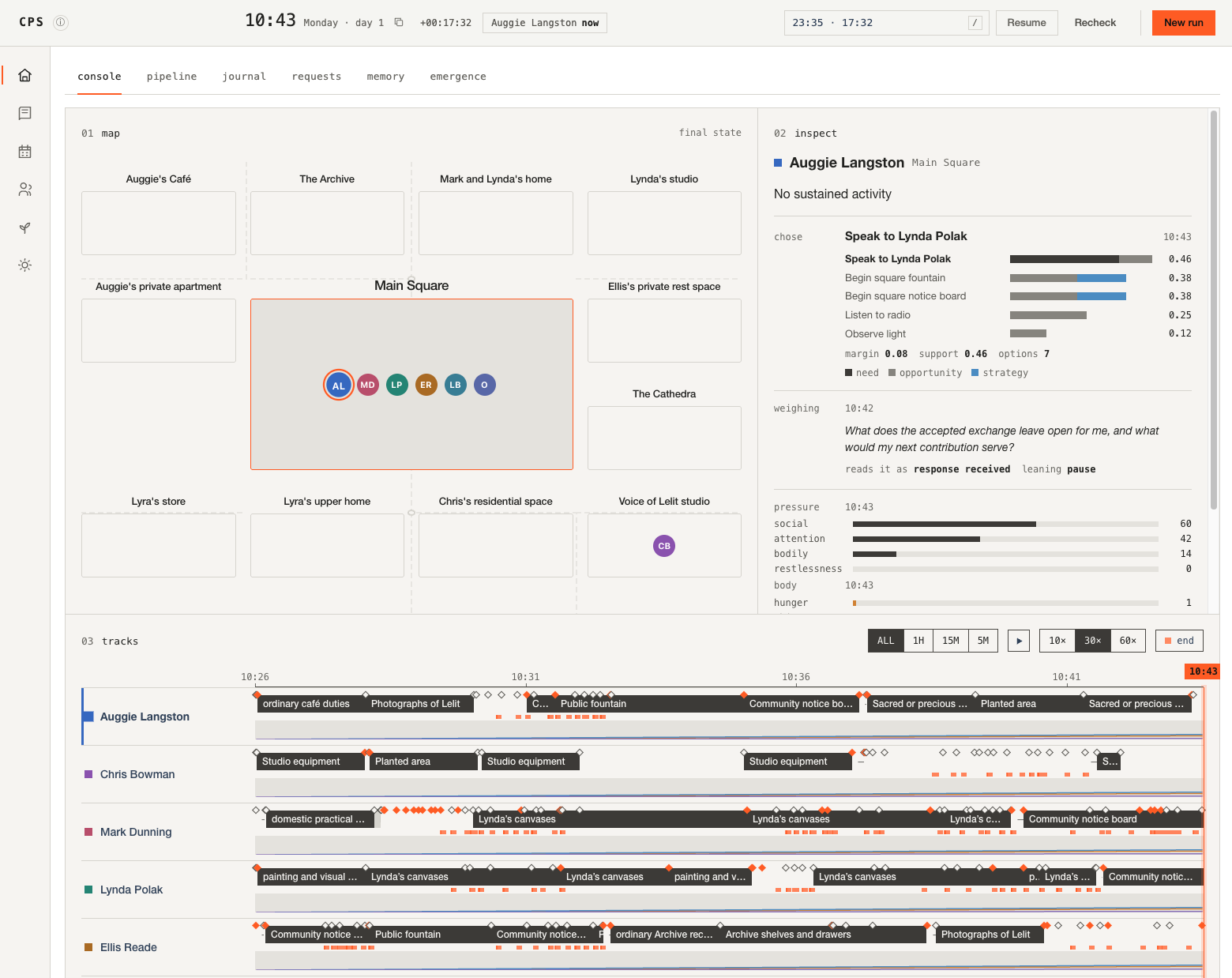
Lelit Distrikt is a separate Unreal Engine project. It uses CPS Studio to operate the simulation behind the experience. I work on the world the participant encounters in one, and inspect the behaviour supporting it in the other.
This connection lets me explore both sides of the same design question: what does an encounter feel like, and what context or memory makes the response understandable?
Lelit Distrikt
Unreal Engine · Places, characters and interaction

CPS Studio
Simulation workspace · Context, memory and behaviour
My workflow
Designing beyond the screen.
This project extends my product design practice into space, dialogue and behaviour. I work through the idea in a prototype, moving between the participant’s perspective and the system that makes the experience possible.
- 01
Define an encounter
I start with a situation: who is here, what they know and what the participant might want to ask. This gives the scene a purpose before I work on its presentation.
- 02
Build the setting in 3D
In Unreal Engine, I bring places, characters and atmosphere together. I consider how scale, lighting and the arrangement of a space guide attention and make an encounter feel situated.
- 03
Connect the world to the simulation
Language models introduce dialogue and variation. CPS Studio provides the workspace for operating the simulation and looking into residents’ context, memories and behaviour.
- 04
Move between experience and explanation
I move between the 3D world and the records behind it. The design question is whether a response makes sense in the encounter, and whether I can understand what led to it.
An ongoing personal experiment
A prototype to keep asking questions with.
Lelit is my way of learning through making. It brings a 3D setting, language models and a simulation workspace into one project I can explore as a designer.
The next question is continuity: can a participant recognise how one conversation connects to a later encounter? That means looking at what residents remember, how their accounts differ and how those differences become part of the experience.
Visit the project website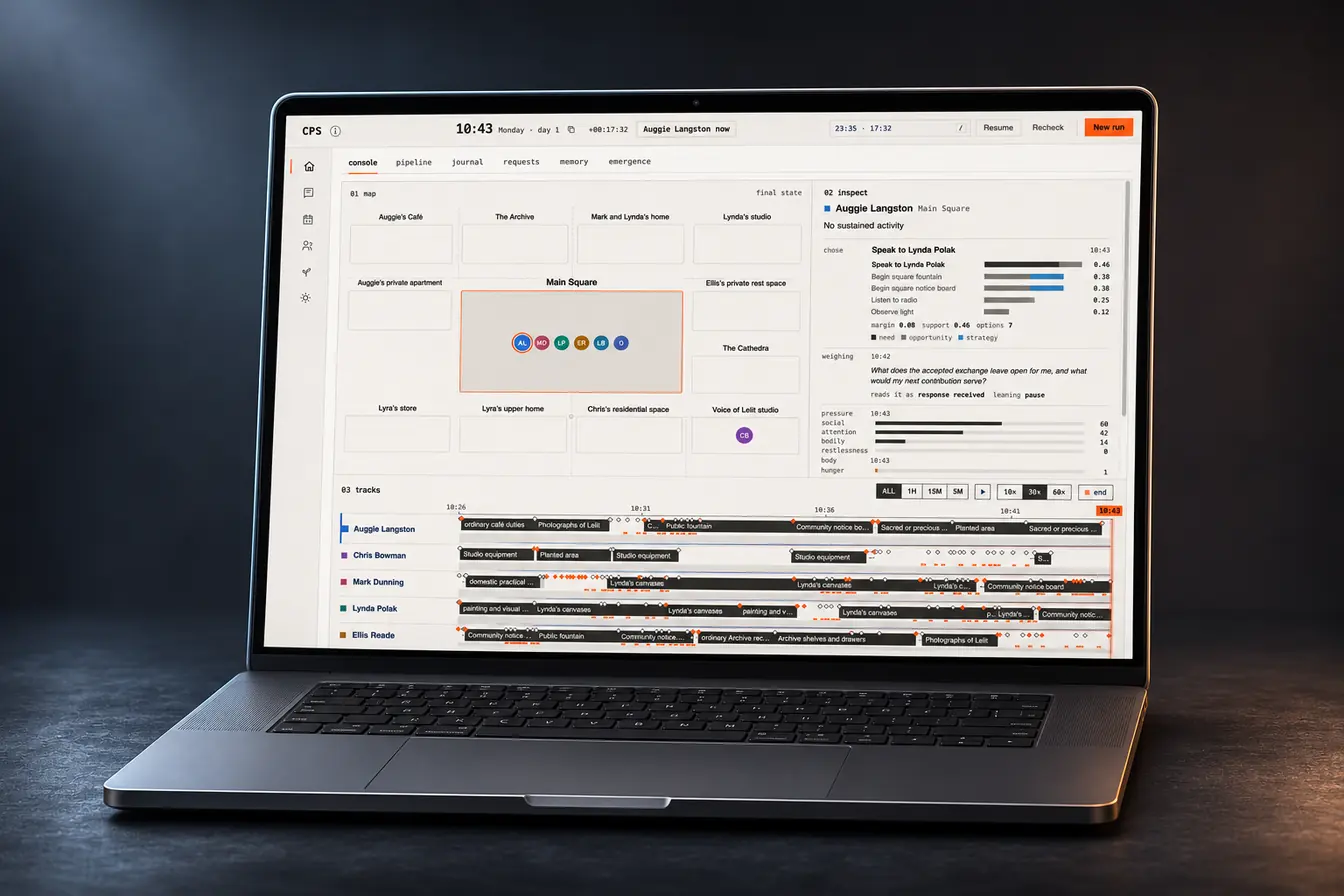
Let’s work together
What could be easier to use?
Tell me about the product and the part that needs fixing. A few sentences is enough.
Tell me about it